Know who is ready to push.
Bar speed can show when an athlete is moving well, dragging, or dropping off before the workout gets away from them.
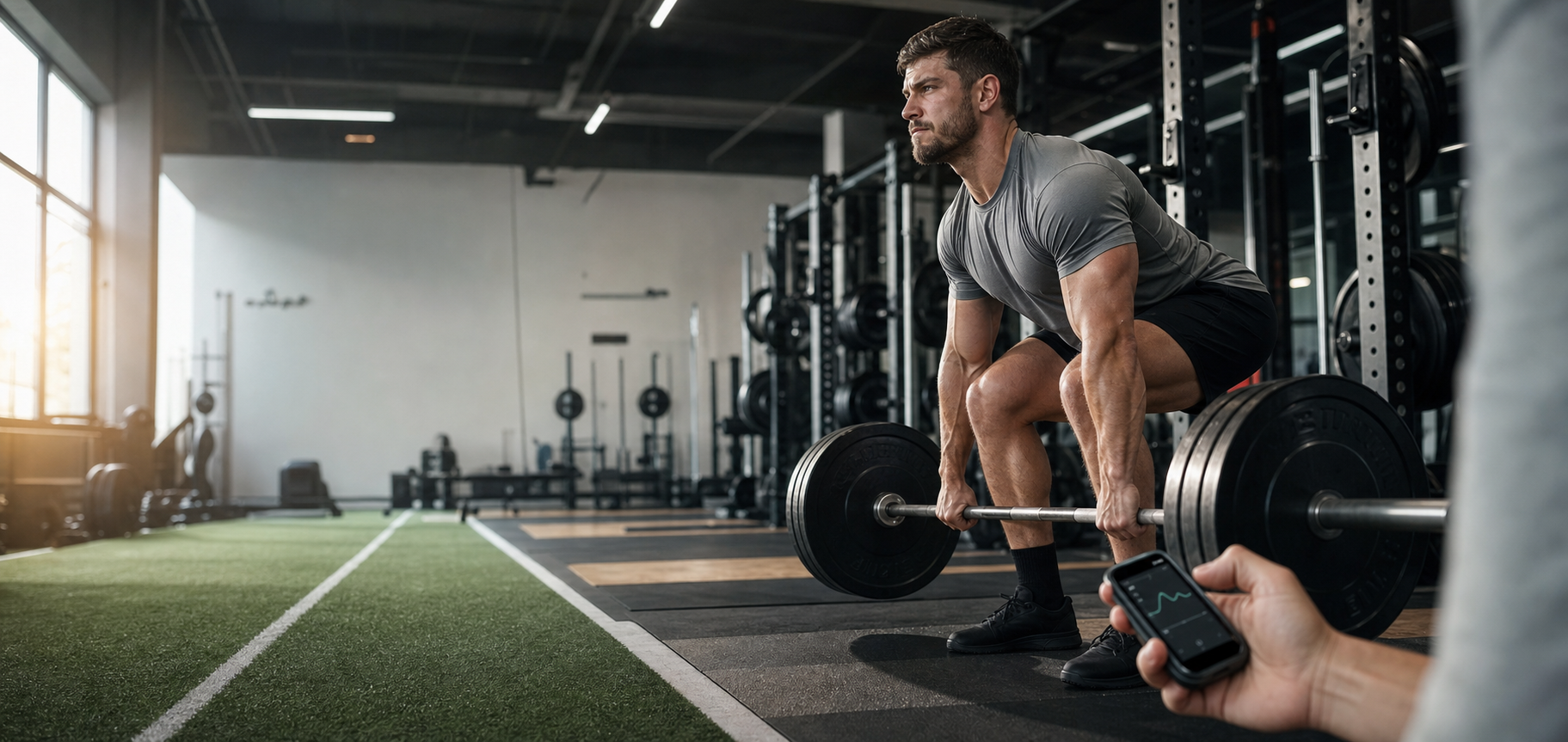
Velocity-based training
VeloTrack helps high school programs, smaller colleges, and trainers measure bar speed, manage athletes, plan workouts, and print individualized training sheets without the hefty price tag.
Top programs use velocity-based systems to make training more objective. VeloTrack is being designed for coaches who need that same decision-making power across an entire roster, without buying expensive hardware.
What is VBT?
Instead of only looking at weight, sets, and reps, VBT measures how fast an athlete moves the bar. That speed tells a coach how explosive, fatigued, or ready an athlete is on that day.
Two athletes can squat the same weight for the same reps and still need different training. If one athlete moves the bar quickly, they may be ready for more load, more volume, or a power-focused emphasis. If another athlete’s velocity drops sharply, that can signal fatigue, poor readiness, or a need to adjust the day’s plan.
VBT also helps coaches train with more intent. Different velocity zones can emphasize different adaptations: faster bar speeds can support speed and power development, moderate zones can build strength-speed qualities, and slower heavy zones can target maximal strength. Instead of guessing whether a set is creating the right stimulus, coaches can use velocity to keep each athlete in the zone that matches the goal.
This is why velocity-based training has become common inside major college and NFL strength programs. It gives coaches a clearer way to manage intensity, track progress, and keep training tied to performance instead of guesswork.
Bar speed can show when an athlete is moving well, dragging, or dropping off before the workout gets away from them.
Adjust load, volume, and exercise emphasis based on how each athlete responds instead of forcing one sheet on the whole roster.
A lineman, sprinter, pitcher, and guard may need different strength-speed targets. VBT helps coaches match the plan to the position type.
Built for access
High school strength coaches, smaller college programs, and private trainers need practical tools that work across dozens of athletes. VeloTrack turns app-captured velocity data into upcoming workouts that can be sorted by rack and printed without rebuilding spreadsheets.
The workflow
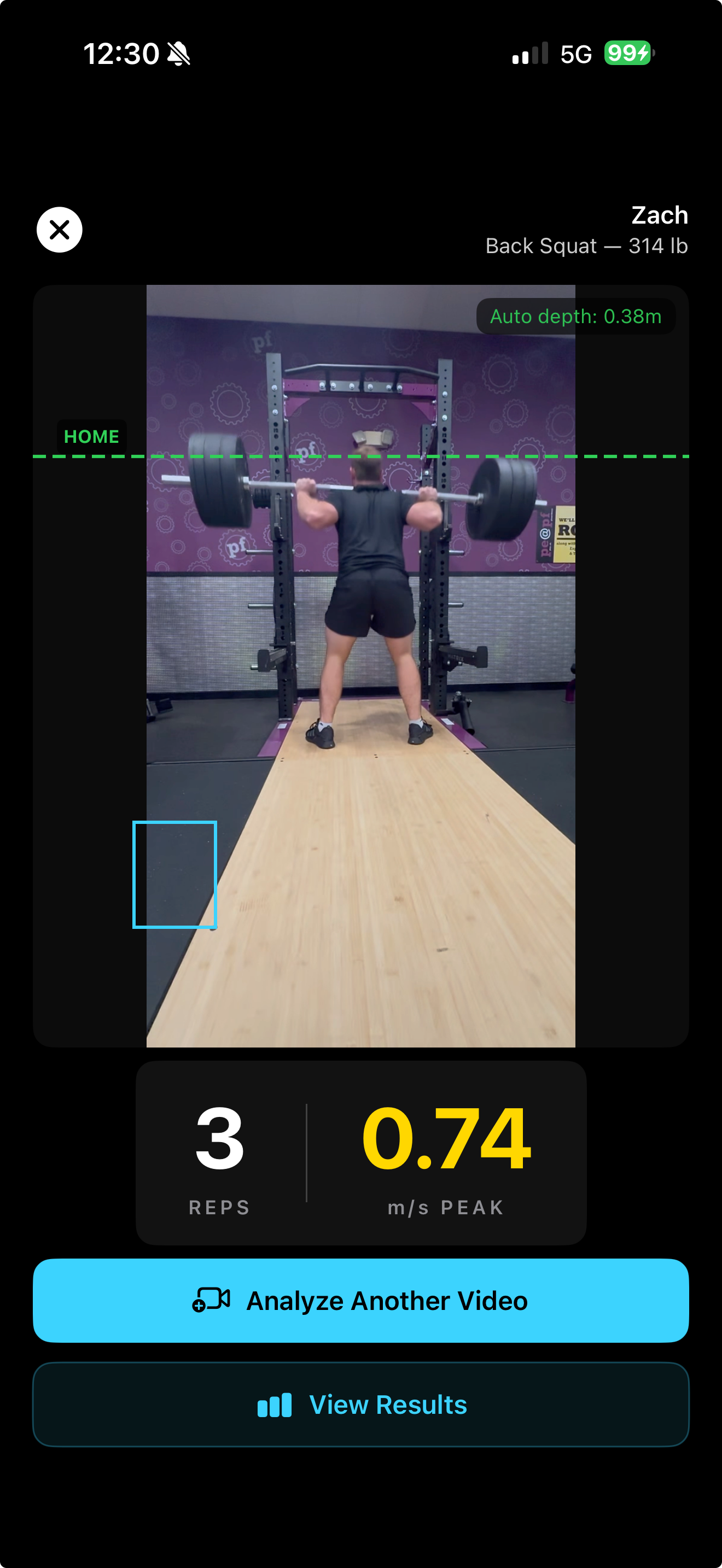
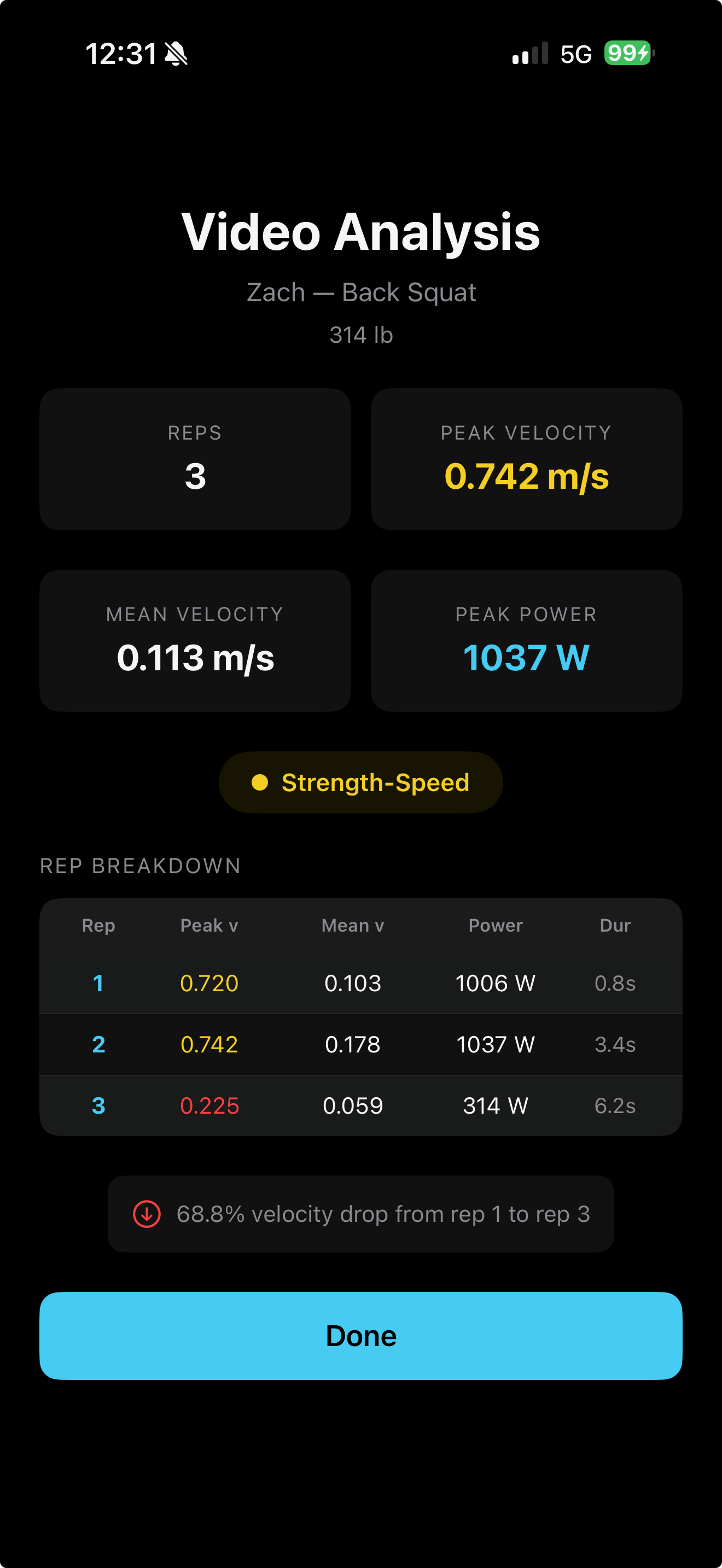
VeloTrack uses video analysis to turn normal training footage into coach-friendly performance data: reps, peak velocity, mean velocity, peak power, rep duration, and velocity drop.
Record lifts from a phone and estimate rep velocity without a bulky fixed setup or premium hardware budget.
Add athletes, organize groups, and sync each lifter’s velocity history into a coach dashboard instead of scattered spreadsheets.
Generate upcoming workouts from the computer interface, separated by rack with athlete-specific weights already calculated.
What it tracks
Upload or record a lift, tag the athlete, exercise, and load, then review the metrics that matter for readiness and upcoming workout adjustments.
Accuracy
VeloTrack's velocity readings are checked against both Perch and GymAware — two of the most established tools in velocity-based training — across core lifts like Back Squat, Front Squat, Bench Press, and Deadlift. Cross-checking against both systems, rather than relying on just one, gives coaches confidence that VeloTrack's numbers hold up against the gold-standard equipment already used in elite programs.
Coach login
Coaches can log in on desktop to review app data after training, manage athletes, build rack groups, plan upcoming workouts, and print individualized sheets before the next session starts.
Organized by sport, team level, position, and training status.
Cleared for training and included in current workouts.
Separated from active lists so coaches see health at a glance.
Synced from app recordings this week.
Velocity drop suggests changes to upcoming volume.
Individualized workouts ready for review.
Synced results available for coach review.
No major velocity drop flags.
Roster-wide fatigue signal.
Anise · Back Squat
Back Squat · 3 reps
Large velocity drops appear here for quick review.
Included in the current filter.
208 performance score
208 average score
Back Squat, RDL, Split Squat
Select entire teams, position groups, or individual athletes.
Back Squat, Bench Press
Bench Press, Barbell Row, Push Press
On the App Store
VeloTrackLifts is live on the App Store — record lifts, track bar velocity, follow assigned workouts, and sync results with your coach's dashboard from your iPhone.
Training solo? VeloTrack already supports it — set your phone up on a stand or tripod and hit calibrate. A built-in countdown gives you time to get to the bar before your set starts. Coming soon: front-facing camera support, so solo lifters can see themselves on screen while training.
Download on the App StoreCoaches record the assigned VBT set from the phone while athletes lift.
Each lift produces the data coaches use to adjust upcoming workouts.
Results sync to the coach portal for roster trends, rack groups, and printouts.
Contact us
We are here to help and respond to any concerns or questions as coaches, athletes, trainers, and programs get started with VeloTrack.